For some people, the staircase becomes the centerpiece of their home. Whether you live in a farmhouse-style home or a transition townhouse, a staircase can be a focal point. There are several types of stairs you can incorporate into your home, from straight to L- and U-shaped stairs to winder staircases. However, it is important to choose a staircase that fits the architecture of your home.
If you are planning to install a staircase in your home or renovate the existing one, you must understand your options to make a better decision. So, read this blog till the end to find out about various types of staircases.
13 Different Types of Stairs You Should Know
Here are some of the stair types you should know -
Straight Stairs
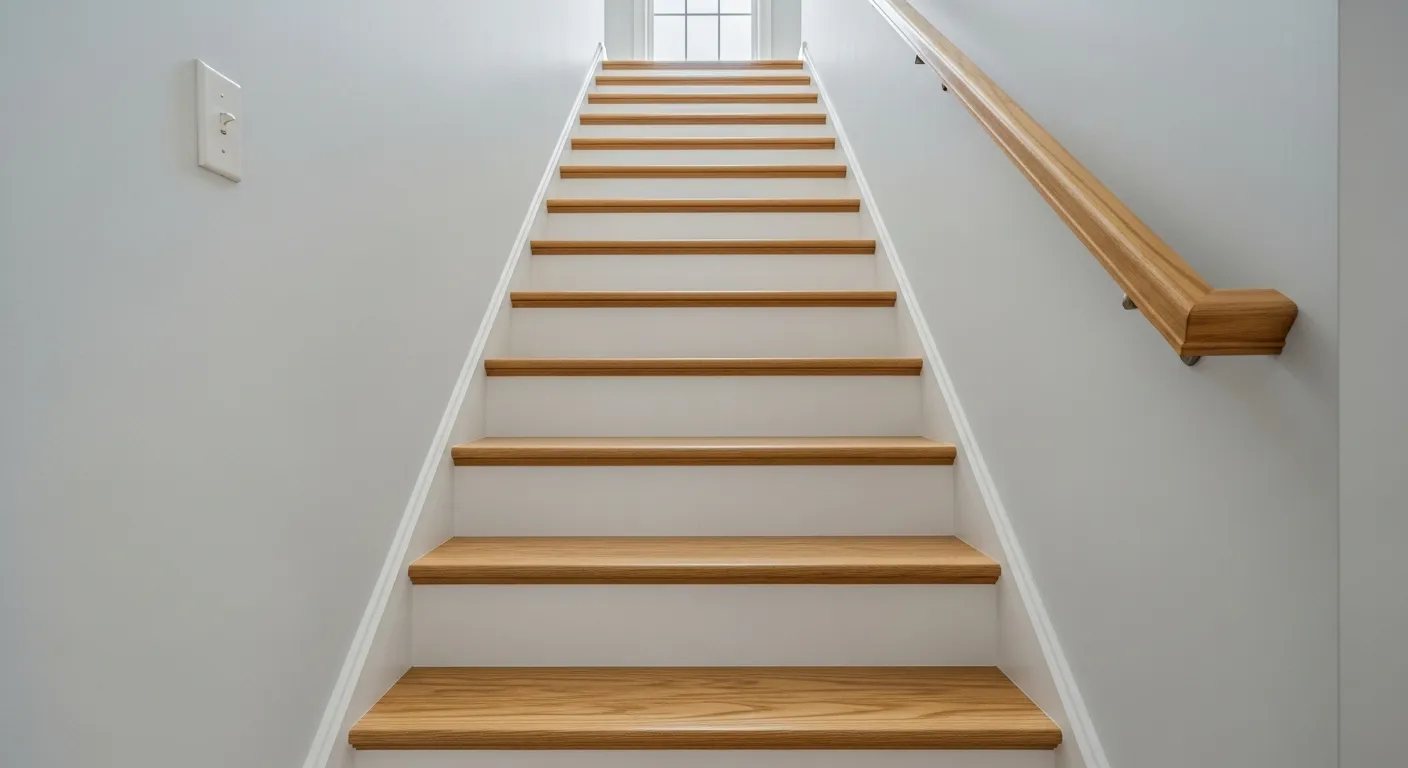
It is a common staircase seen in almost every household. The straight staircase looks pretty and has a linear flight with no curves or change in direction. They are very affordable because of their simple, easy-to-build structure.
L-Shaped Stairs
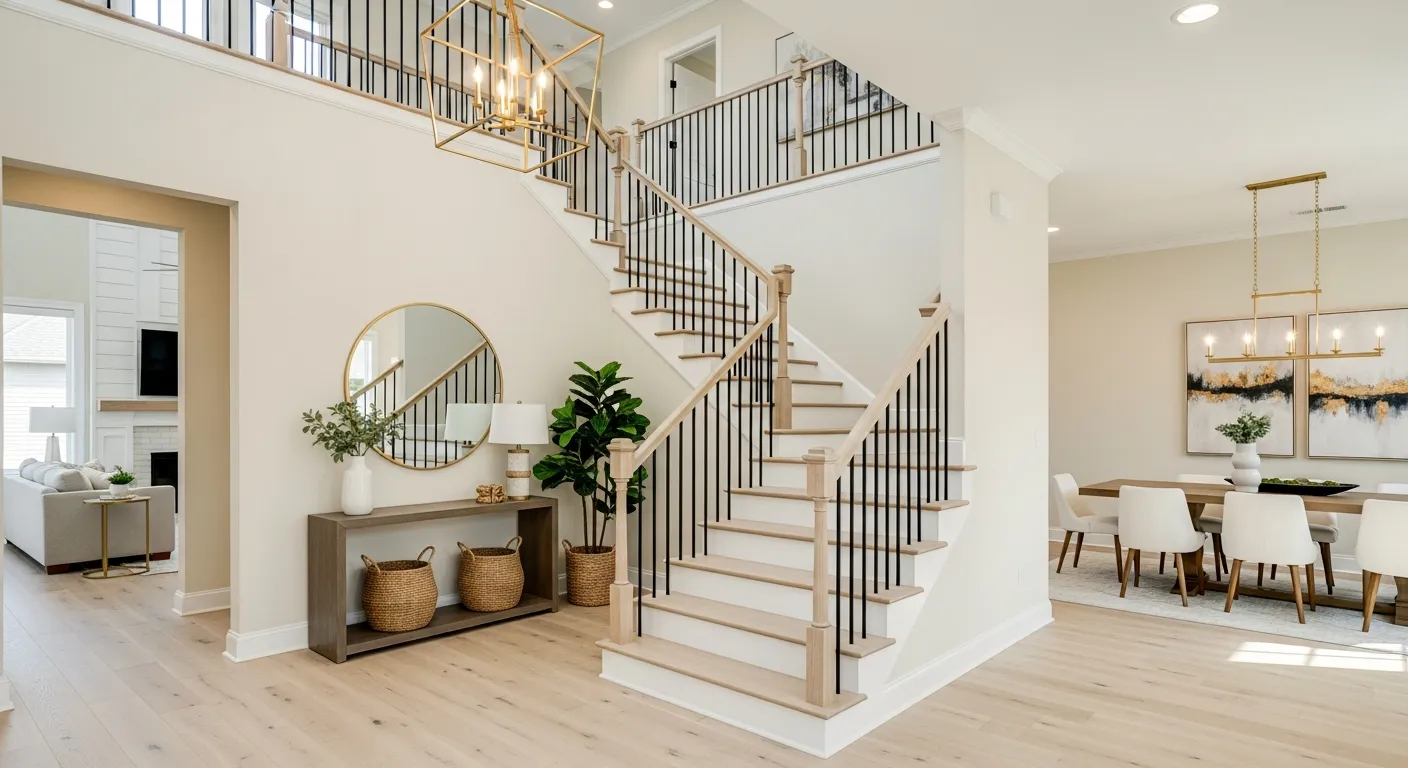
Also known as quarter-turn stairs, L-shaped stairs are quite similar to straight stairs. The only difference is that the L-shaped stair has a 90-degree turn, either in the middle or near the end. The division is connected to a landing, which is usually short.
L-shaped stairs are considered safer and more visually aesthetic. They also serve as visual barriers, providing privacy. However, they are a bit more difficult to build. Also, they cannot be used for basements, as the stairs' design might make it difficult to move things in and out of the space.
U-Shaped Stairs
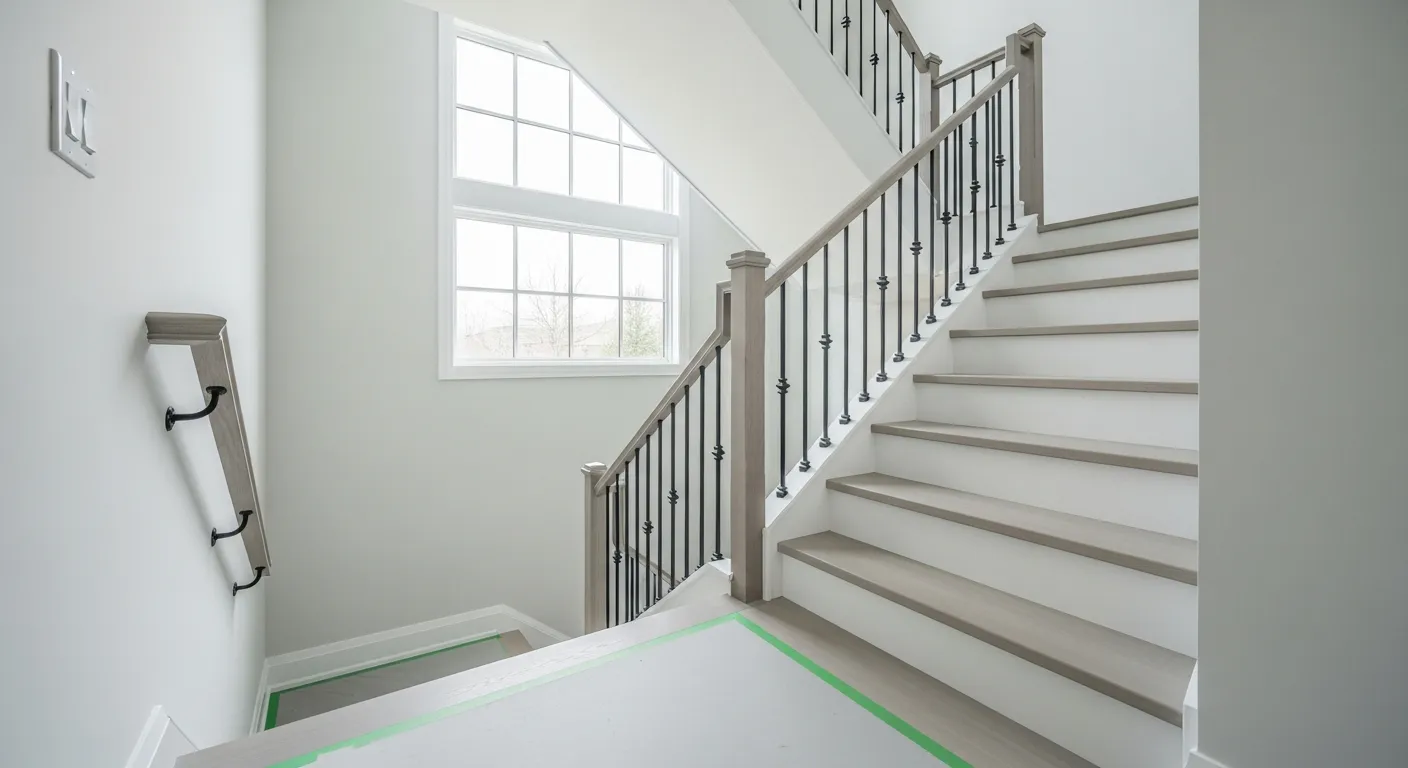
U-shaped stairs are also called switchback or half-turn stairs. It includes two sets of stairs, connected by a landing, that go in opposite directions, forming a U shape. The landing also works as a resting point. This stair is located at the corner of the home and turns, just like an L-shaped stair.
Ladder Stairs
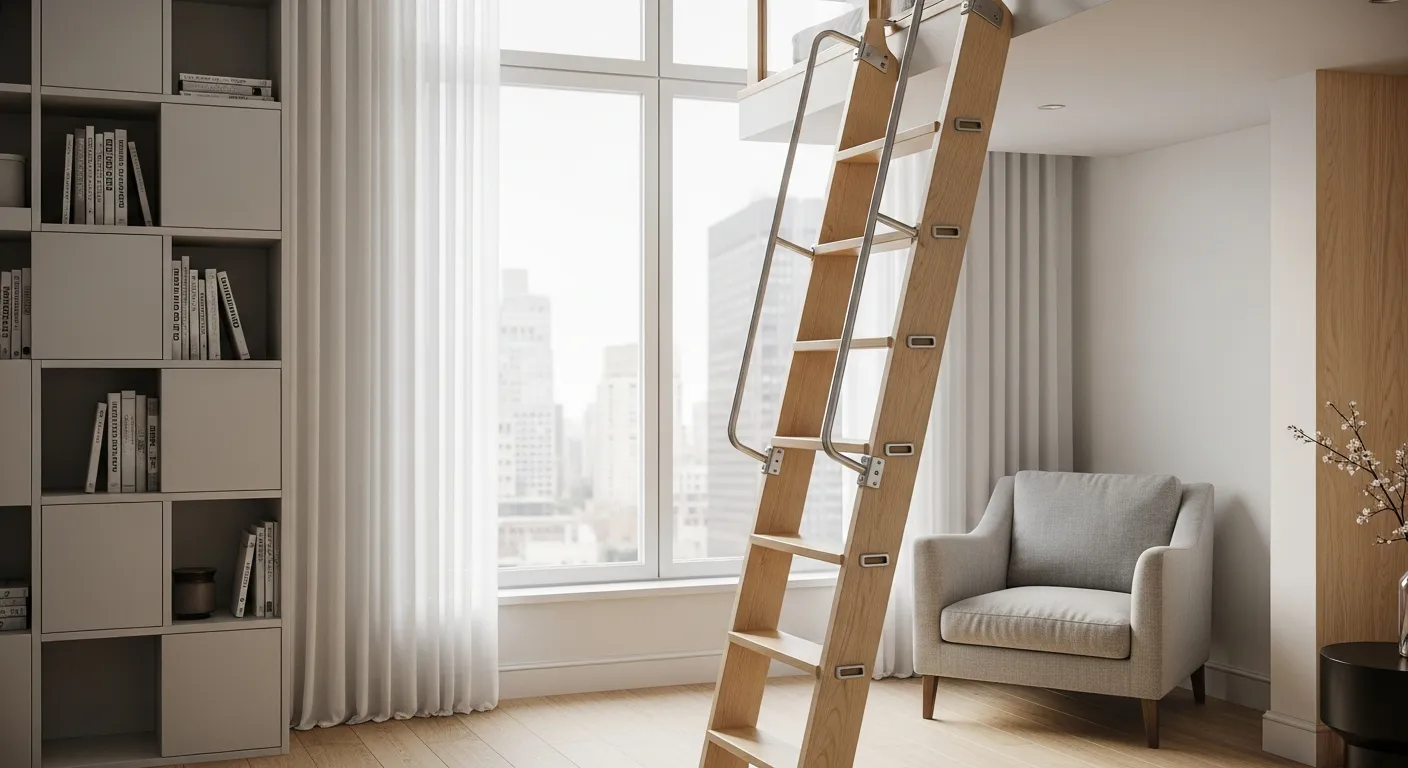
If you have a small home, you can consider a ladder stair. These are great for compact spaces, such as the lofts and libraries. Some people love to keep it simple, while some may want a decorative variant.
Stair Tower
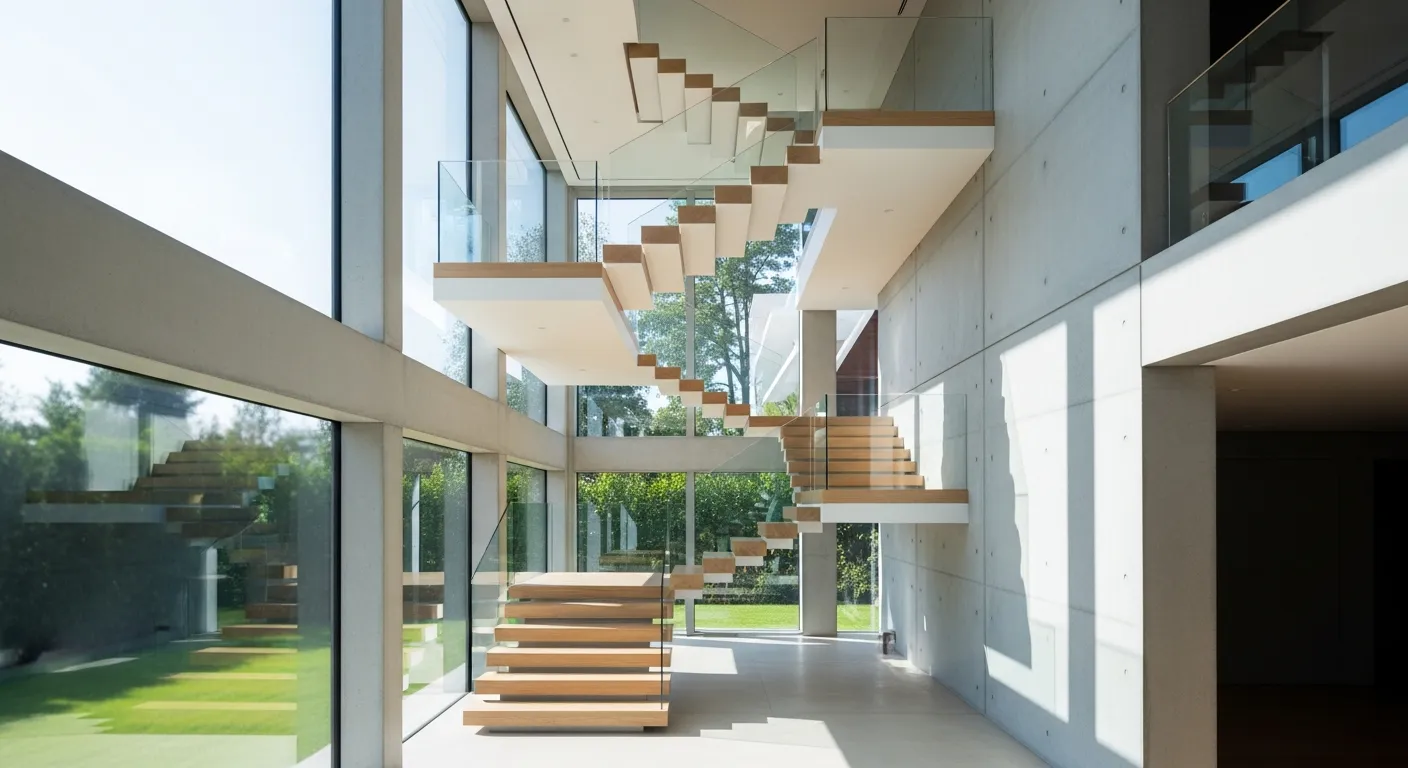
A stair tower is usually seen in a multi-story home, where each floor is accessed using the same flight of stairs. It features landings between two stairs on each floor and is surrounded by one or more walls or windows, creating a tower-like effect.
Winder Stairs
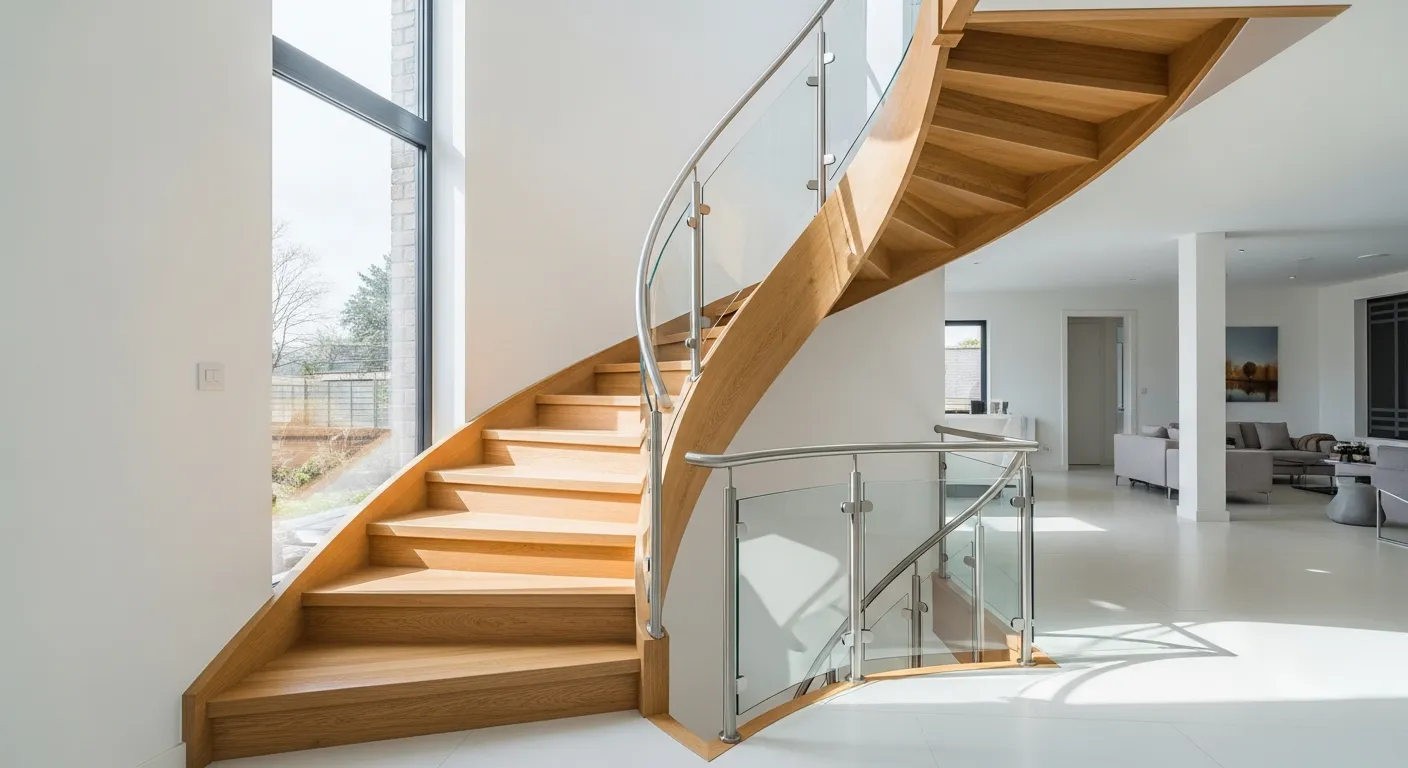
A winders stair is a variation of the L-shaped stair, but it doesn’t have a flat landing. Instead, they have pie-shaped or triangular steps connecting the two flights of stairs, mostly at the corners. It requires less space and creates a seamless transition around the corner.
Though it was quite popular in older homes, new modern interiors are also incorporating the idea because of their compact nature. However, installing a railing can be difficult due to its winding structure. But with a little creativity and a professional set of hands, you can overcome the challenge.
Spiral Stairs
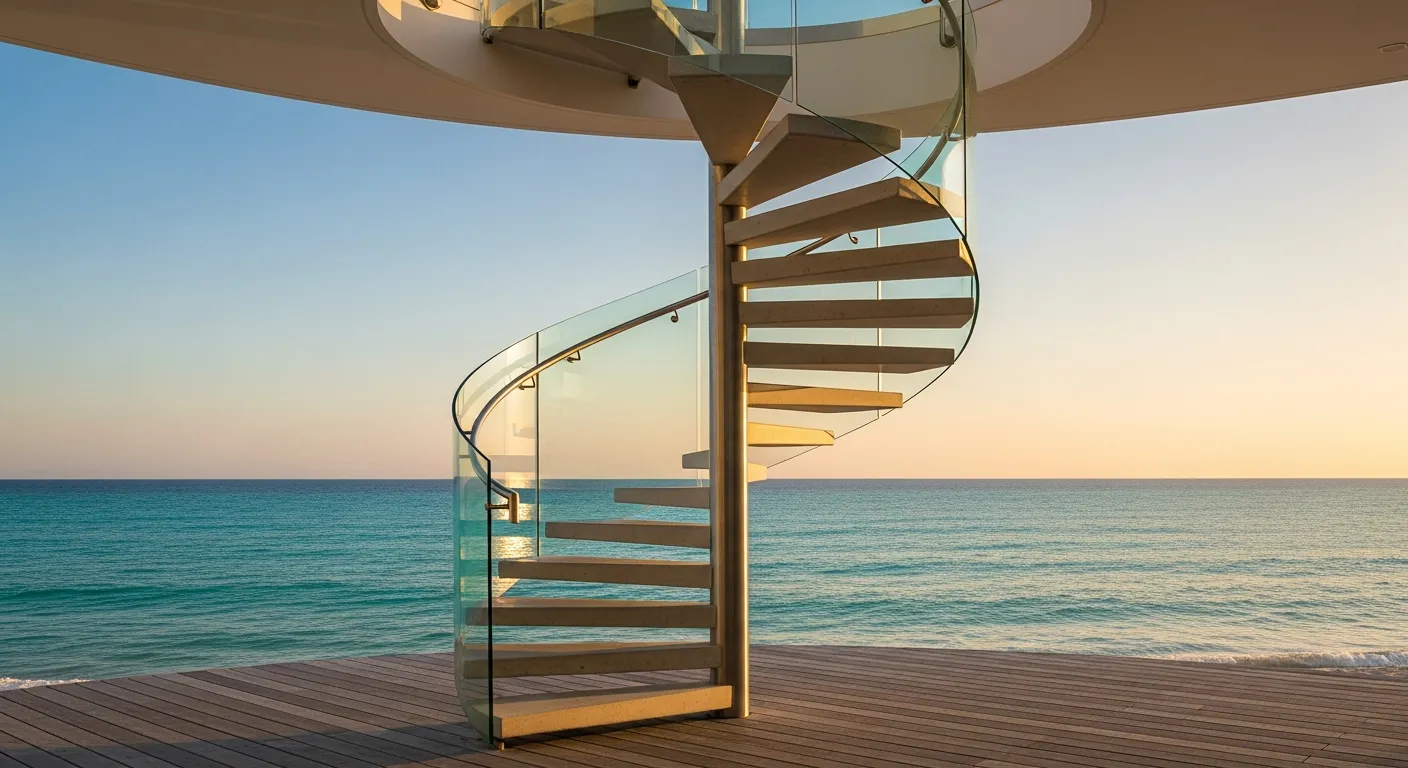
Spiral stairs have a compact design and follow a helical pattern that wraps around a central column. They are popularly seen on beachfront decks, city lofts, and other compact spaces. Spiral stairs are visually appealing, especially with the variety of railing styles that can change the look and feel of the space.
The installation is quite easy, as the central pole and landing provide the structural support to the stairs, so they don’t need any additional support. However, they are difficult to navigate, and carrying larger items upstairs becomes challenging. As a result, several building codes do not allow a spiral staircase as the primary stair.
Curved Stairs
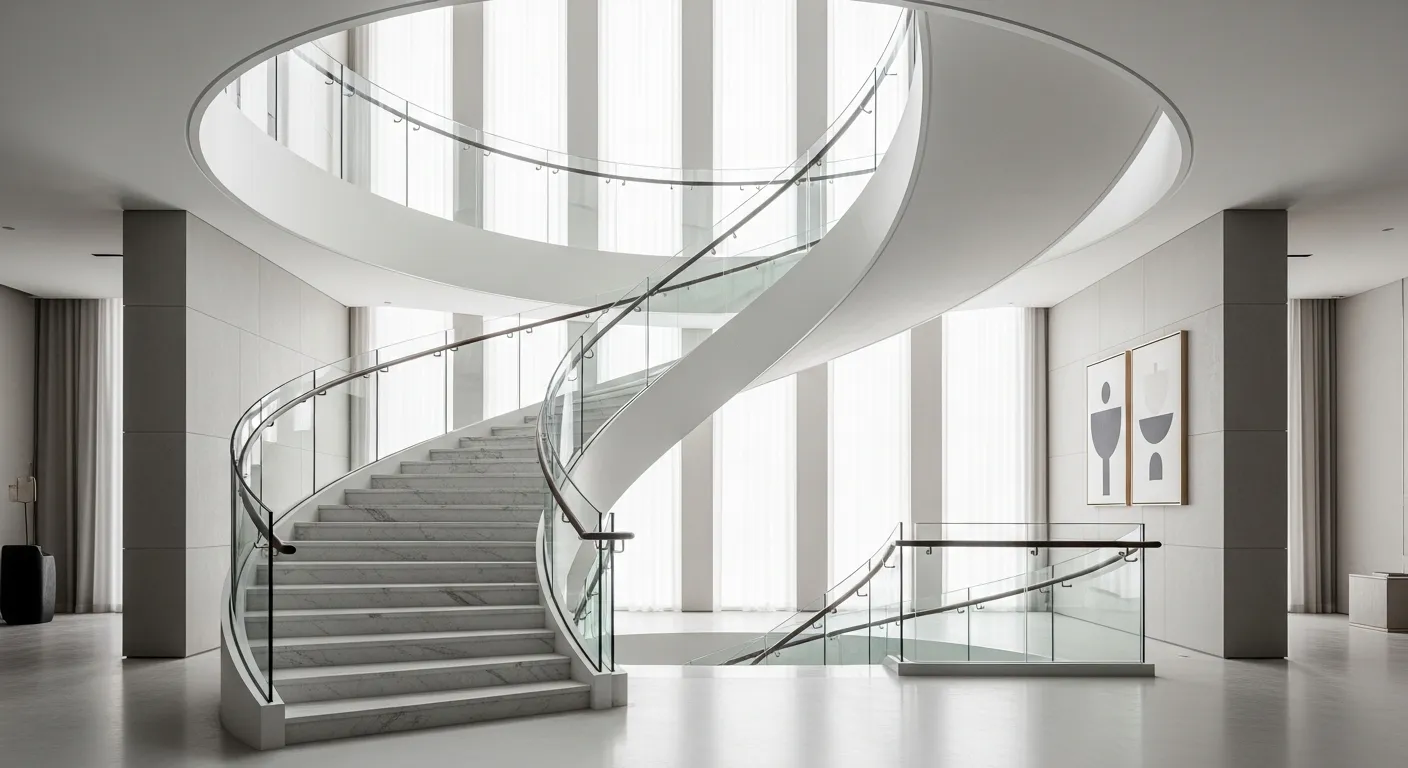
Curved stairs follow a helical structure, too, but they have a much larger radius and do not make a full circle. They look elegant in homes and commercial spaces, and that’s why they are preferred at the entrance, where first impressions always matter.
Curved stairs can easily be integrated into contemporary designs and are easier to walk up when the radius is larger. But curved stairs are relatively difficult to build and are costly, too.
Bifurcated or Split Staircase
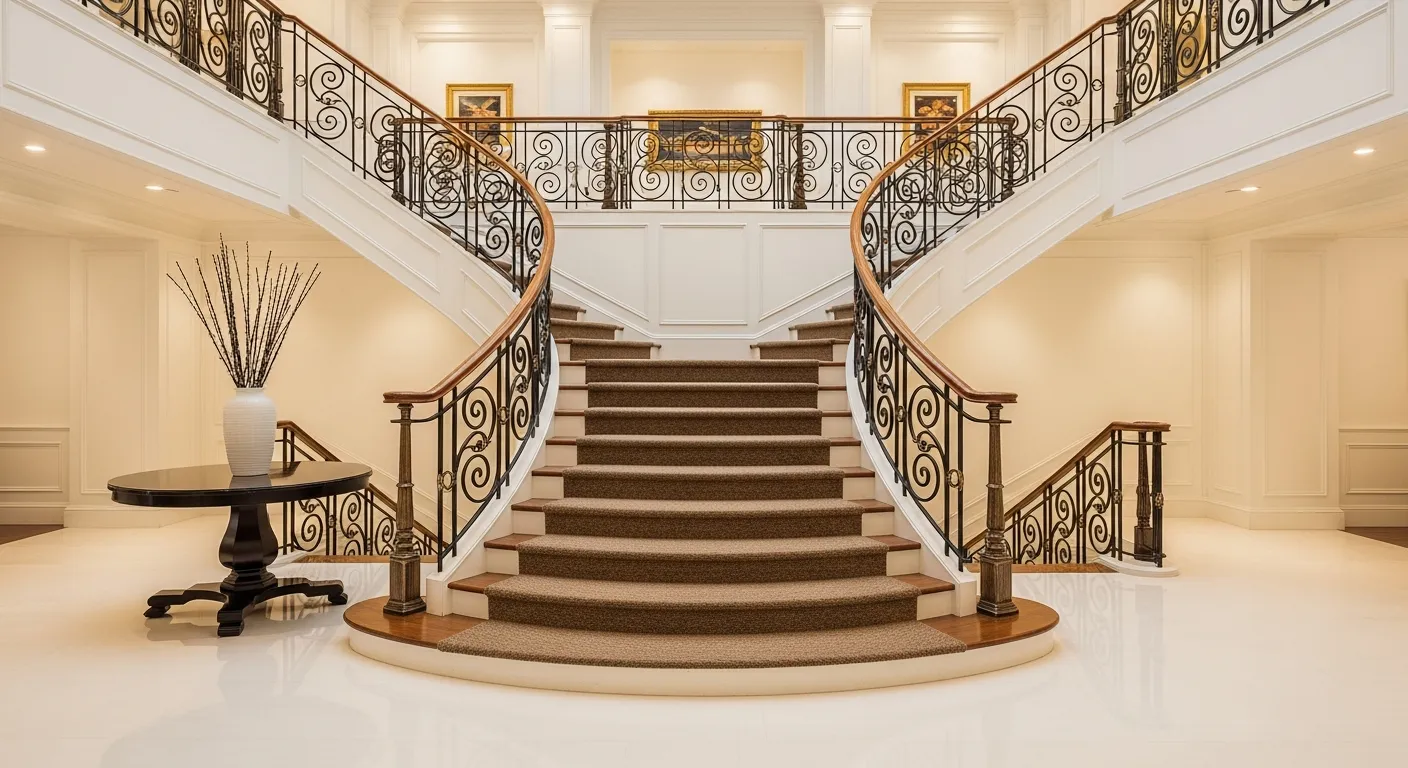
A bifurcated or split staircase looks grand and can be found in historic estates and luxury hotels. It has one wide flight that leads to a generous landing, and from there, two smaller flights split off into opposite directions.
A bifurcated stair usually opens into a hallway, making the entryway more elegant. However, this stair type requires a spacious area and requires a hefty investment, due to railings and detailed work.
Grand Stairs
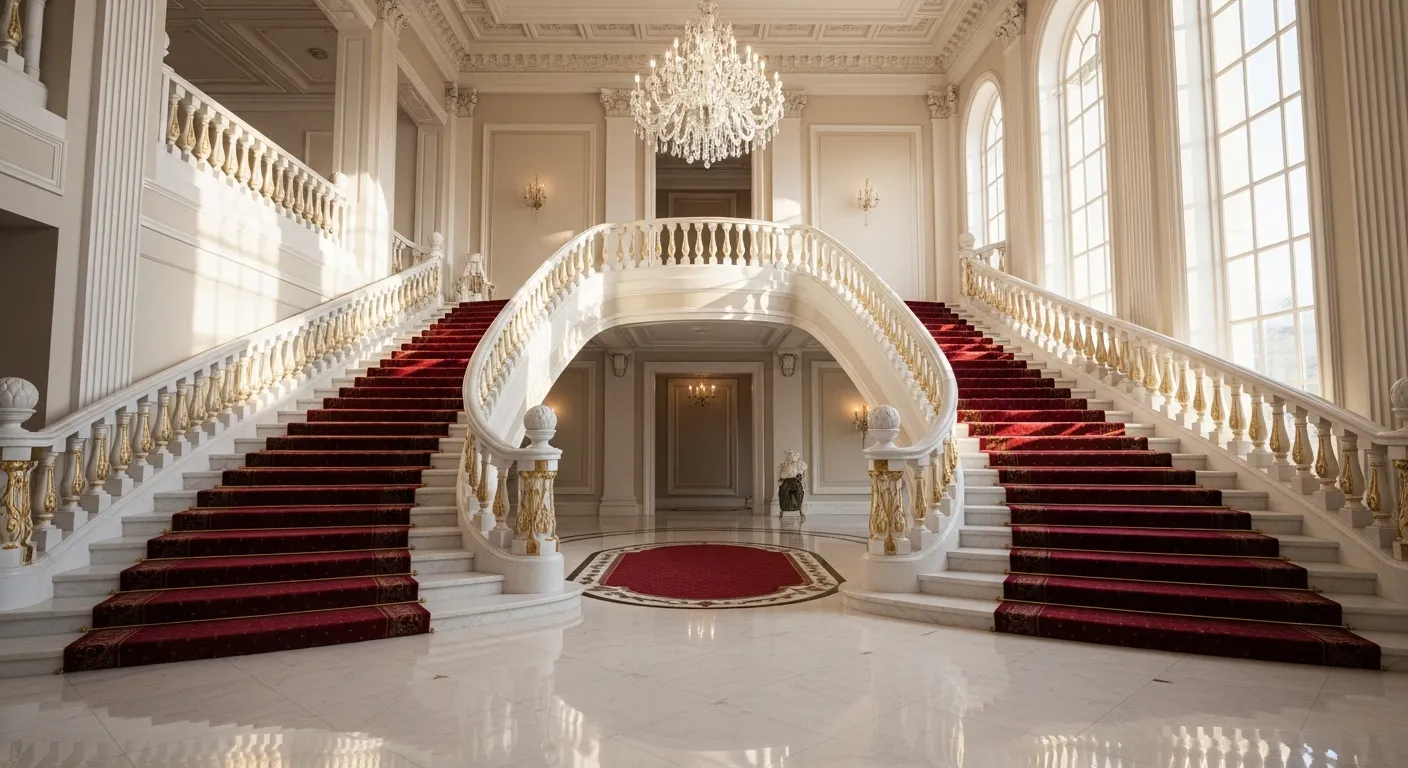
A grand staircase looks like something from a fairytale, making the home feel elegant. This luxurious staircase is most often found in foyers, and its design features two flights of stairs connected in the middle of the building.
Dual Stairs
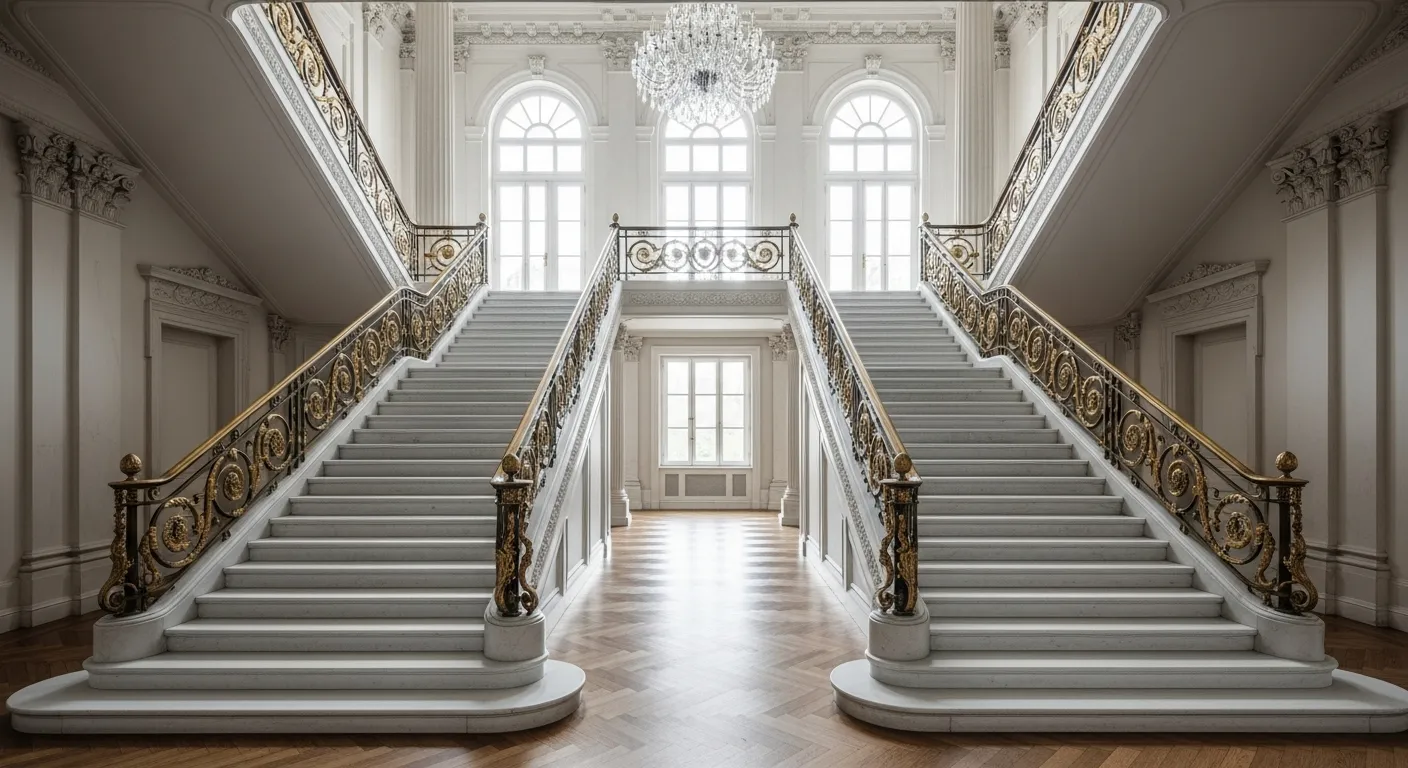
Dual stairs are similar to grand stairs, which are mostly built to make a statement. These stairs do not have a central landing connecting the two flights of stairs. Instead, each stair starts and ends separately.
Monostringer Stairs
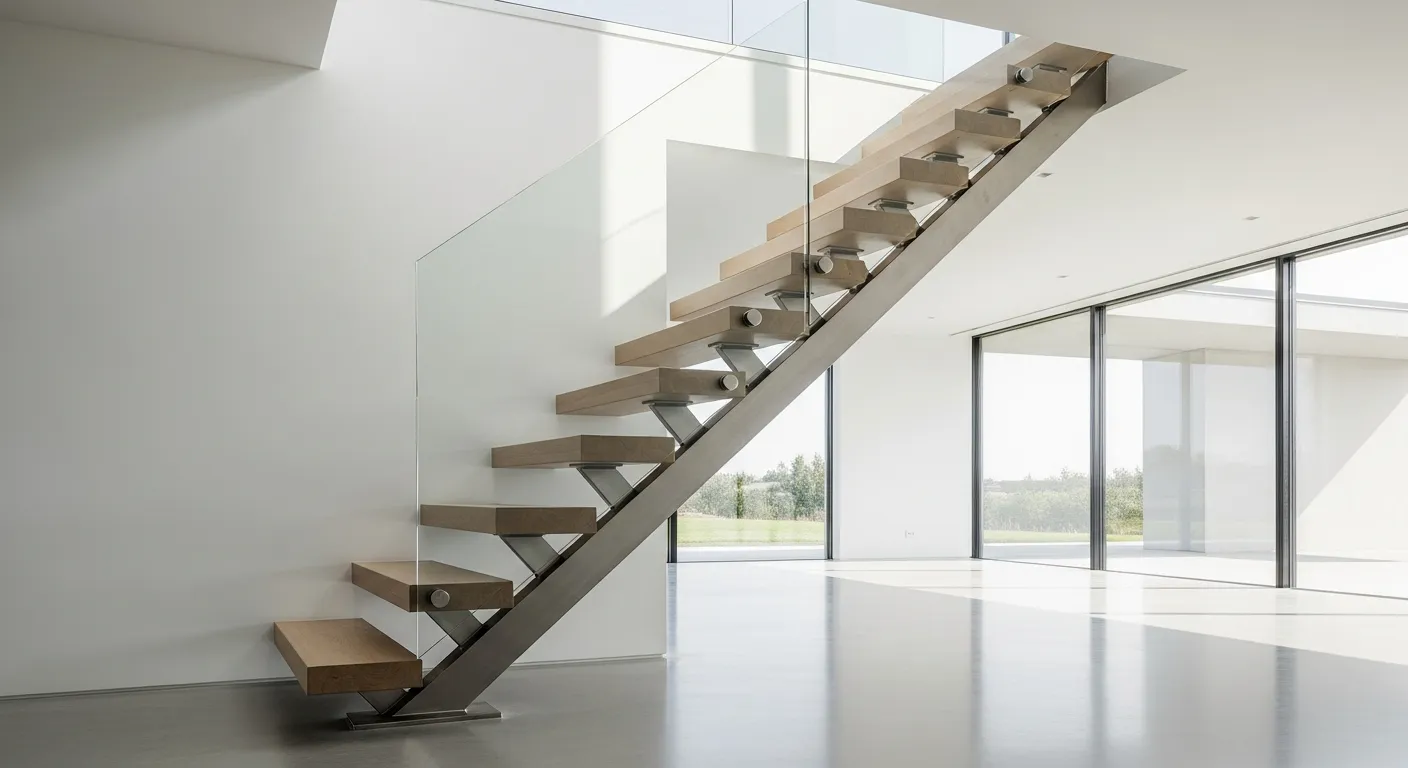
The monostringer staircase is one of the most popular types of stairs. It has a single exposed metal beam that supports the entire staircase. Thus, creating a beautiful look even in a minimal home. The other section is either anchored to the railing system or floats.
Monostringer stairs complement any minimalist home and can be customized as per your liking. It can also be a type of open riser design that can be built around almost every building and complies with all safety codes.
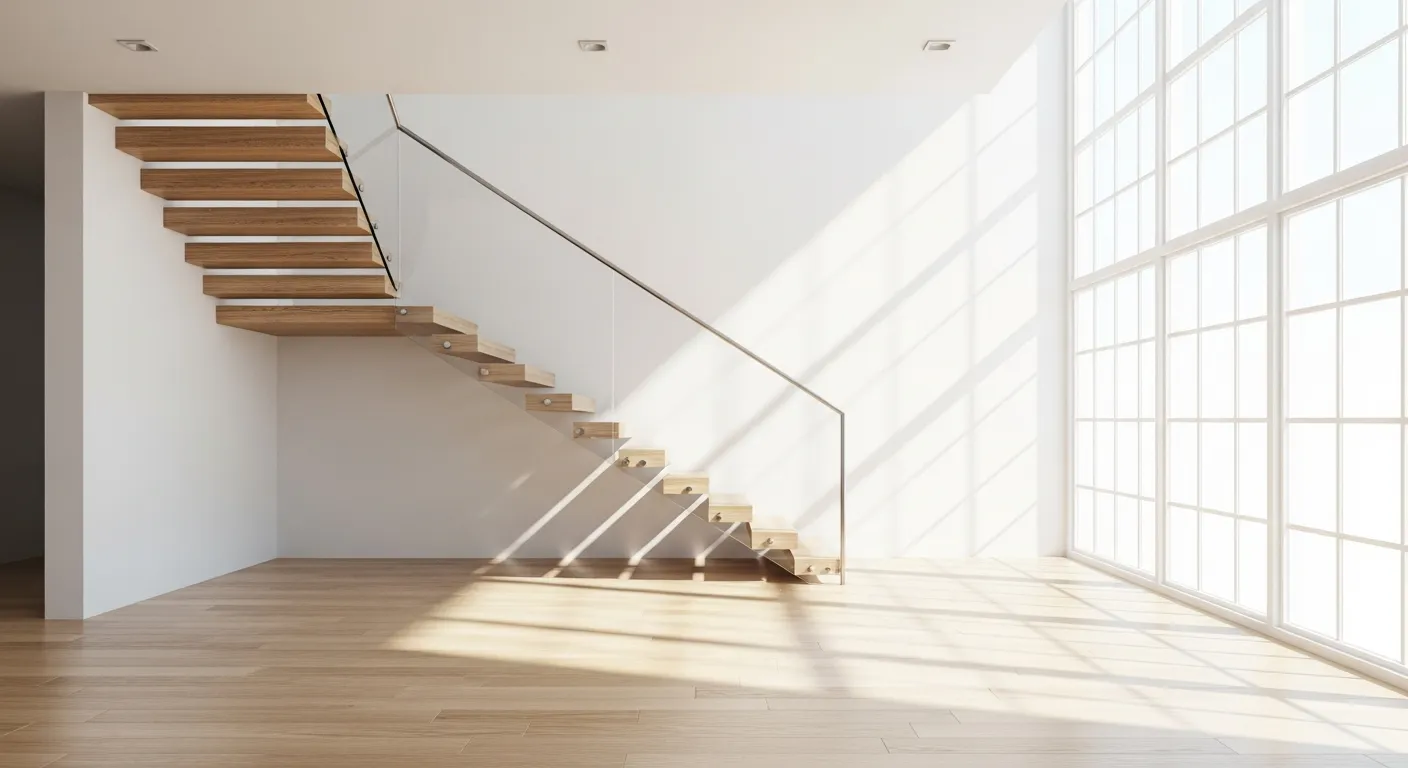
Cantilever Stairs
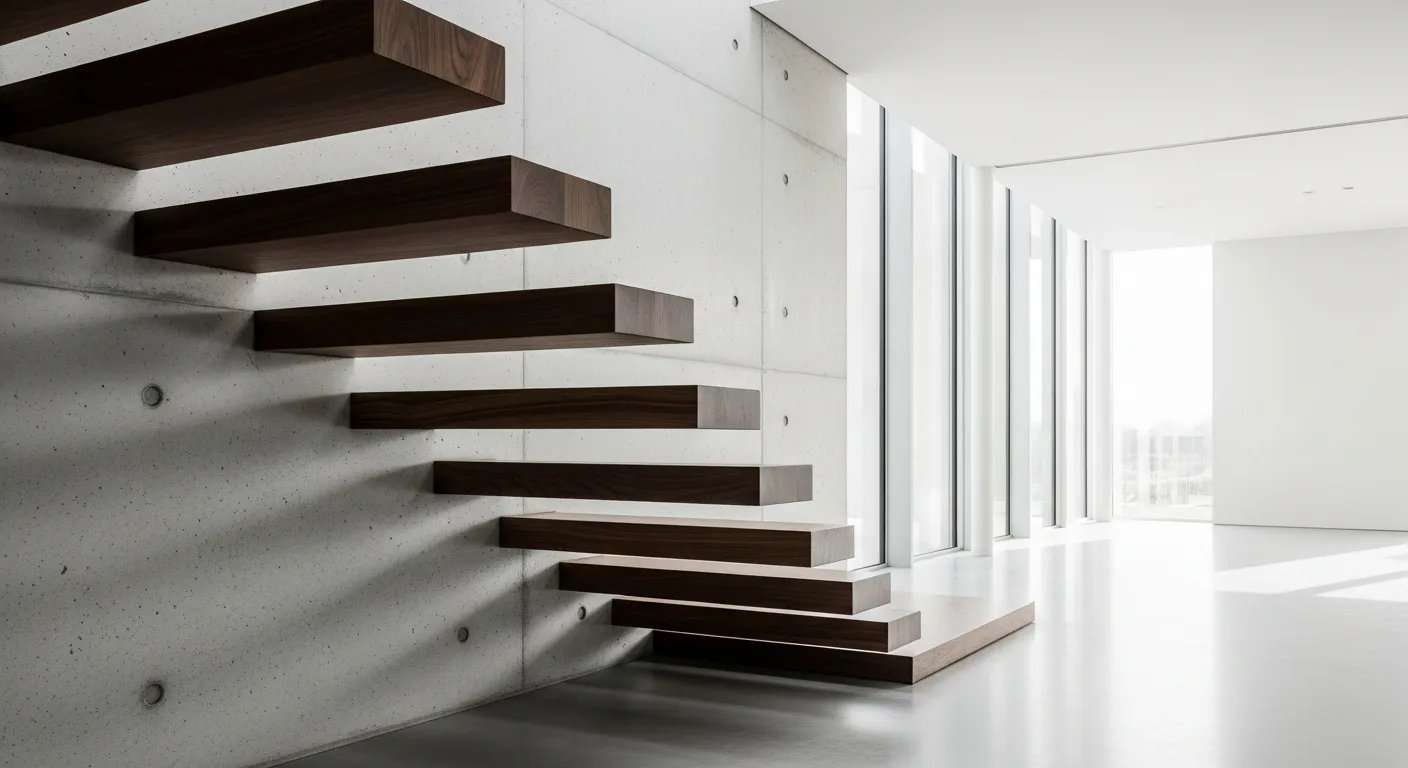
Cantilever stairs have treads fixed at one end, with the other end either securely attached to the railing or left to float freely. The fixed treads are usually attached to the walls.
Professionals can use a metal frame by creating a pocket in the wall or by attaching a small stringer along the wall. But they can be quite difficult to build and require careful planning to ensure they comply with local building codes.
How to Choose the Right Stair for Your Home?
There are several factors to consider when choosing the right stairs for your home. The first thing you should consider is your home’s architecture and setting. This helps you pick the stair that complements your home, rather than making it overwhelmed or look out of place.
Next, consider the amount of space you have. If you have enough room, choose a more ornate stair design, such as a grand or bifurcated stair. However, if you are working with a tiny space, you can opt for a spiral or curved staircase. You must also check the regulations before building a staircase, as the rules vary across the region.
Last but not least, consider your budget, as the choice of stairs depends heavily on it. Make the stairs a focal point while keeping functionality a priority.