
The door's orientation depends on hinge placement and swing direction. These elements determine handing and define how the door opens—understanding door handing is essential for proper installation and function. It also plays an important role in selecting the right hardware, planning room layouts, and ensuring that the door meets the safety standards.
At first, it might seem difficult to figure out. However, once you know what to look for, you can easily identify whether a door is a left-hand or right-hand door. This guide explains simple methods to determine door handing so you don't make mistakes.
What is Door Handing?
Door handing, also known as door swing direction, refers to the door's orientation, as determined by the position of its hinges and the direction it swings open. It identifies if the door is left-handed or right-handed. It also ensures the door and its hardware are installed correctly. Understanding door handing is important for several reasons, such as -
- Safety: Proper door handing ensures the door opens without blocking people and makes emergency exits easier.
- Appearance: Door handing also affects the room layout, visual flow, and furniture setup.
- Functionality: A well-handed door is easier and more comfortable to operate. If a door swings the wrong way, it can interfere with furniture and make everyday movement less convenient.
- Building Codes: Make sure the door handing is on the correct side to comply with local codes and regulations.
What is a Left-Hand Door?
A Left-Hand door is a swinging door that opens to the left. The hinges are on the left side when viewed from the side you pull. Here are some types of left-hand doors -
- Left-Hand Inswing: These doors swing open into the room. When viewed from the outside, the knob appears on the right, and the hinges are on the left.
- Left-Hand Outswing: These doors swing out of the room, for example, toward a hallway. When standing outside, the hinges are on the left, and the knob is on the right.
What is a Right-Hand Door?
A right-hand door has its hinges on the right side of the door, and when viewed from outside, it appears to be on the left side. If you open it from outside and the door swings away from you, it is a right-hand door.
How to Determine if a Door Is Left-Hand or Right-Hand?
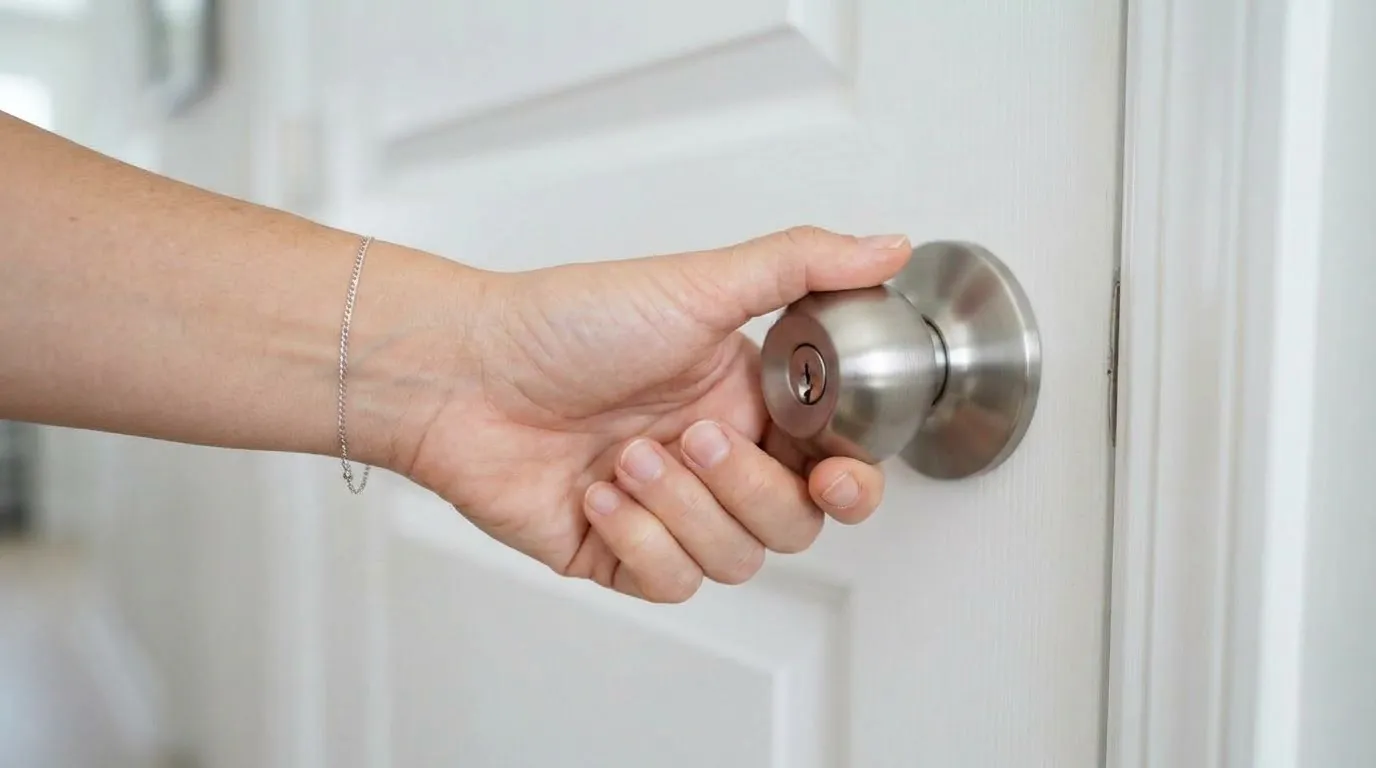
To determine a door's handing, stand facing the door. If you pull it toward you to open it and the hinges are on the left, it is a Left-Hand (LH) door. However, if the hinges are on the right, it is a Right-Hand (RH) door.
The Standing Position Method
- Stand on the outside of the door (where outside means the place where you open the door while entering).
- Next, face the door and check the hinges.
- If the hinges are on your left, it is a Left-Hand door, whereas hinges on the right indicate a Right-Hand door.
The Open Door Method
- Open the door completely.
- Stand inside the doorway with your back resting against the hinge jamb (the space where the butt hinges attach to the wall).
- Look at your hands, and whichever seems to be closest to the doorknob is considered the “hand” of the door.
- If the right hand is closest, it is a Right-Hand door, and if the hand closest to the left is considered a left-hand door.
Active and Inactive Door
Most doors feature two wings, and only one of the wings is generally active. The other wing stays inactive and is usually secured with flush bolts and astragal hardware. For proper installation, it's important to know which door stays active and which should remain dormant.
- Active Door: The active door is the one you use often when entering or exiting the home.
- Inactive Door: The inactive door stays closed when not in use. Bolts usually secure these doors to prevent drafts and ensure security.
What Are Left-Hand Reverse and Right-Hand Reverse Doors?
A Left-Hand Reverse (LHR) door is an outswinging door that has hinges on the left side. When you stand outside the doorway and pull the door toward you to open it, the door swings outward.
A right-hand reverse door is an out-swinging door that hinges on the right side and opens away from the room. When you stand outside the room facing the door, the knob is on the left side, and the door opens outward to the right.
Common Mistakes When Determining Door Handing
Though determining door handing may seem easy, people still make mistakes that can affect hardware placement and accessibility. Here are some common mistakes made when determining door handing -
- Deciding the handing from inside a room for an exterior door is the biggest mistake. Industry standards state that you must determine handing from the outside.
- Some people may order a Left-Hand door when they actually need a Left-Hand Reverse door. So, always check where it swings. If the door opens inwards (away from you) and the hinges are on the left, it is a Left-Hand door. However, when the door opens outward (away from you) and the hinge is on the left, it is a Right-Hand door.
- Not understanding the “back against the hinges” rule can lead to picking the wrong door handing. Always make sure you are standing in the correct position relative to the door.
- Forgetting to check for special hardware or assuming that all handles are fully reversible is a common mistake. Check the latch level and handing requirements to avoid latch binding or failing to engage.
Conclusion
When determining whether the door is left-handed or right-handed, take a few moments to identify the correct handing before investing in the door of your choice. This prevents installation errors, hardware compatibility issues, and unnecessary replacement costs. Checking the door handing also helps you find the right lock, hinges, and other hardware. It also ensures compliance with building requirements.