

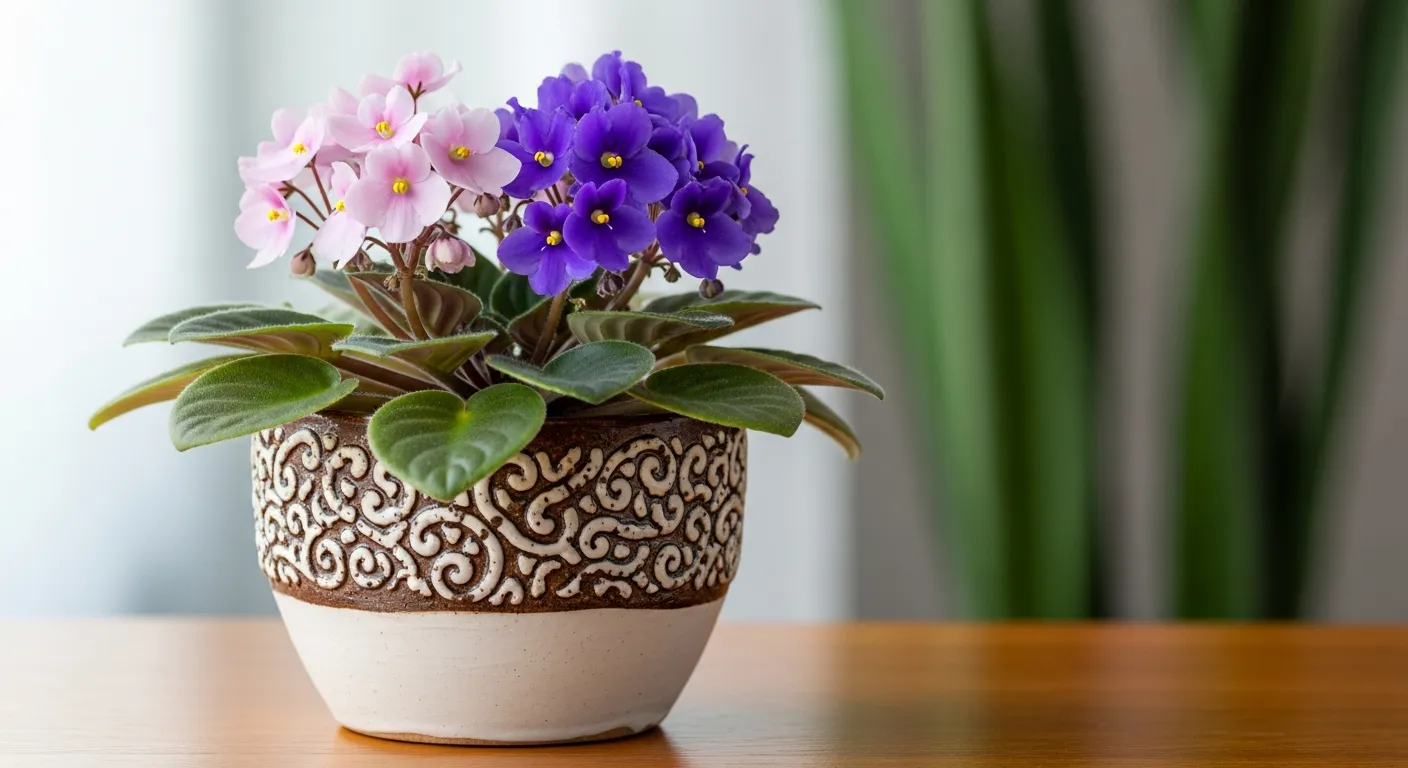
African violets are one of the most favorite flowering plants for several reasons. One major reason is that they don't grow haphazardly or overtake the house. Instead, they are quite manageable. The flowers are beautiful, and the plant is easy to take care of. However, these adorable plants can be a bit unpredictable: some find them easy to grow, while others may struggle to keep them alive.
The best part is that once you understand the basics of African Violet care tips, including what to do, what mistakes to avoid, and learning what the leaves are trying to say, it can all make a huge difference.
This blog aims to make care tips easier for those who love to have African Violets at home but are worried about killing them.
What Is an African Violet?
African violets were discovered in 1892 by Baron Walter von Saint Paul-Illaire. To honor the discovery, botanists named the plant Saintpaulia ionantha, often called Saintpaulia. These beautiful blooming plants are native to tropical mountain rainforests in eastern Africa, particularly in Tanzania.
African violets grow best in warm conditions, with temperatures typically between 18 degrees Celsius and 32 degrees Celsius. They require an annual humidity of 77% and do not thrive in direct light. As low-growing plants, they benefit from the partial shade of a tall forest canopy.
The plant no longer produces only violet flowers. Because of their popularity, breeders now offer a wide range of hybrids with different flower colors and leaf shapes. You may also see pink, white, mauve, and bicolor flowers, making the African violets a beautiful addition to any indoor space. They offer single blooms or pairs that gracefully rise above their soft, velvety leaves.
A typical plant grows up to 8-12 inches in size, while the miniature plants stay around 4 inches in width.
Ideal Growing Conditions for African Violets
Though African violets are easy to care for, they need ideal conditions to thrive and bloom beautiful flowers. To keep them healthy and encourage abundant flowering, make sure these basic growing conditions are met -
Lights
African violets need 11-14 hours of bright, indirect sunlight to stay healthy and blooming. Do not keep them in a place where it receives direct sunlight, as it can scorch their leaves.
Temperature
African violets require temperatures between 65-75 degrees Fahrenheit during the day. A modest drop at night is best, as it encourages the plant to grow and bloom well.
Humidity
These plants need higher moisture and humidity. If the humidity isn't ideal, use a humidifier to keep African violets happy and thriving. You can also use humidity trays.
Soil
The soil should be airy, loose, and fluffy. Avoid regular potting mix, as it's too heavy for these plants. You can either buy the potting mix from the store or make your own. To make the potting soil -
- Mix 1 cup peat moss
- 1 cup vermiculite
- 1 cup perlite
| Notes |
When using commercial potting mix, don't over-fertilize the soil, as these mixes contain added fertilizers. |
How to Water African Violets Properly?
As African violets are native to rainforests, they don't like to dry out completely. You should maintain moist soil - neither too dry nor too soggy. Excess moisture can damage the roots and leaves and may lead to less blooming. The trick is to find the right combination of watering and substrate, which makes watering absolutely easy.
There are three ways to water African Violets -
Water From Top
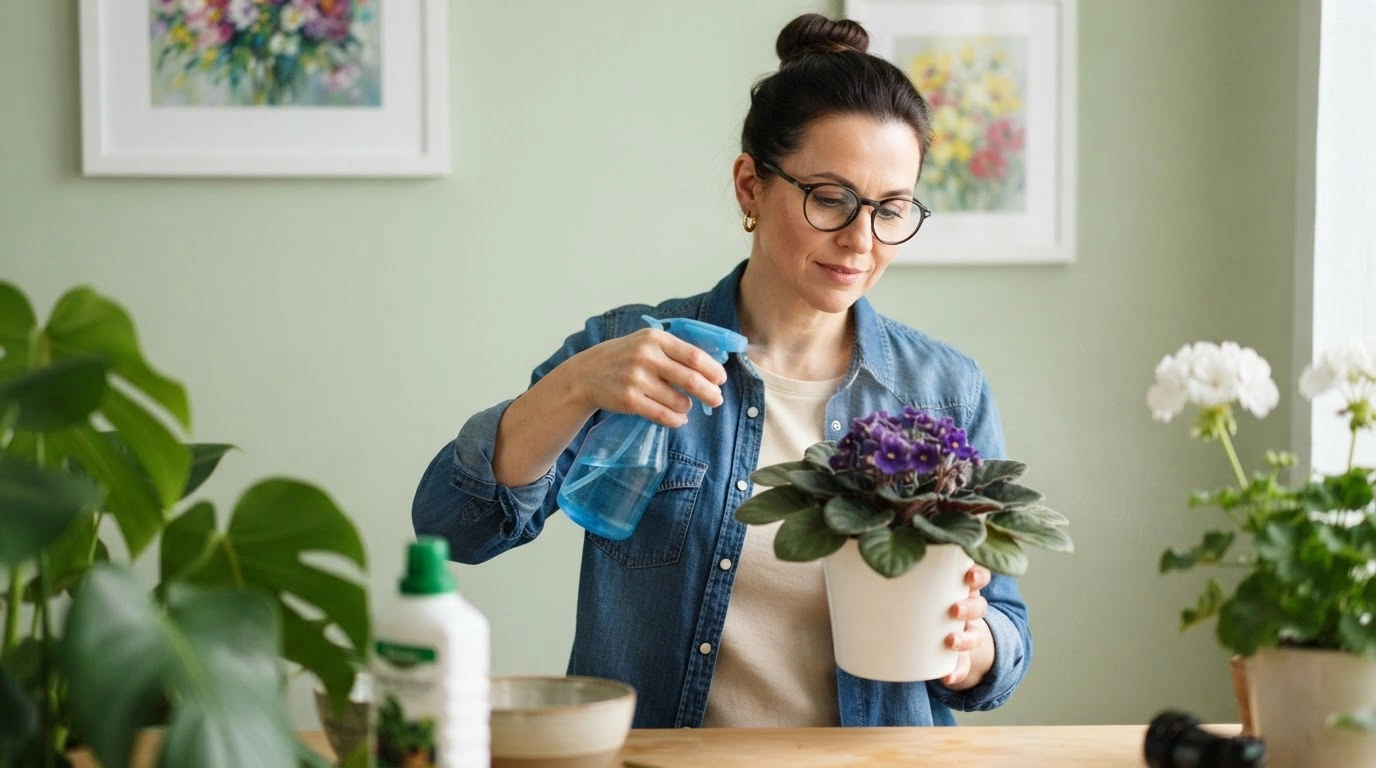
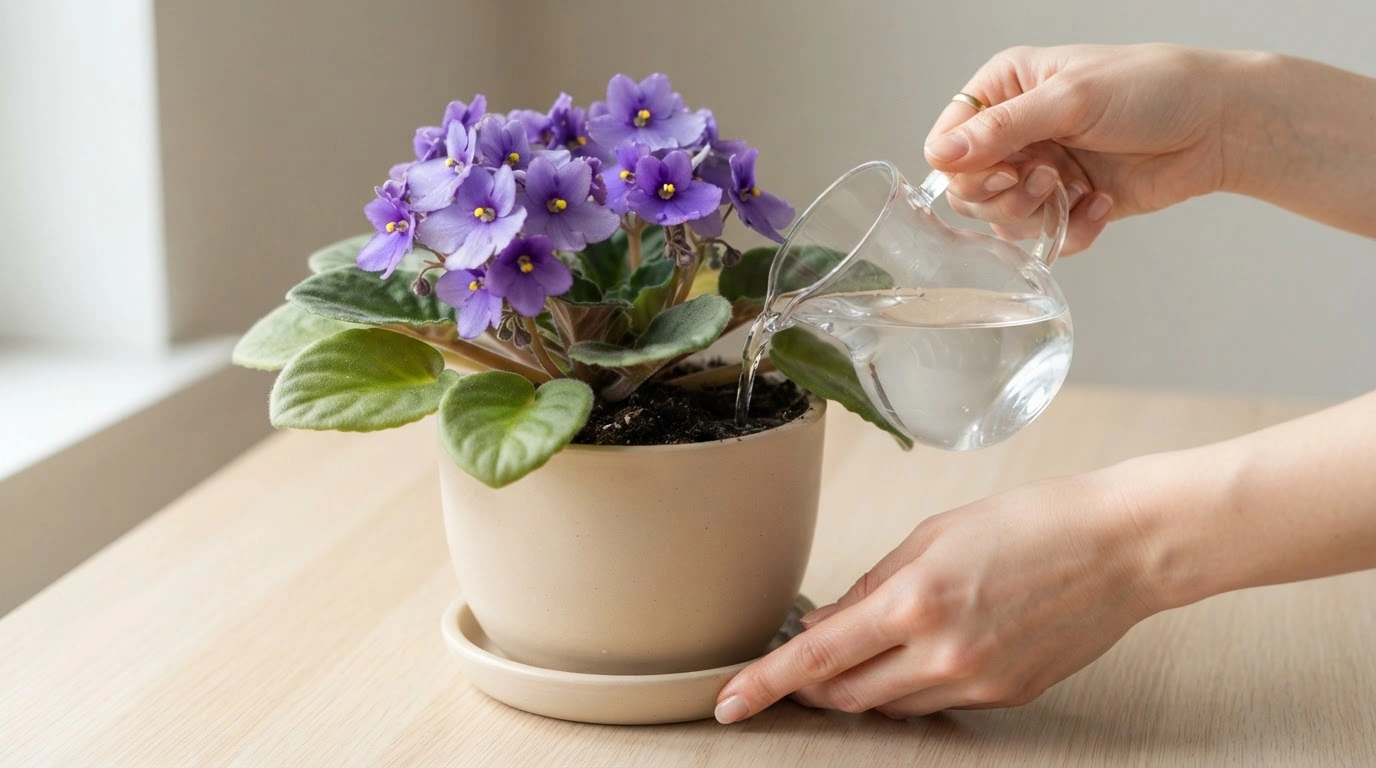
Top watering is an easier method for African violets that haven’t completely bloomed. Pour water directly onto the potting mix while keeping the leaves dry to prevent damage. Use room-temperature water and ensure the substrate is fully saturated. Also, make sure the water drains out of the drainage hole.
Avoid leaving dry spots in the pot so that all roots get water. Any dry part of the root can cause root hairs to dry out and die. Dead roots can also cause root rot when you water the plant again. This is because dead roots cannot absorb water and can rot.
| Pro Tips | Water the plant twice. Wait a few minutes between waterings until most of the water has drained out. Then water from the top again to ensure you do not miss any spots. |
Water From Bottom
To water the plant from the bottom, place the nursery pot in a large container filled with room-temperature to lukewarm water. This allows the water level to reach about halfway up the nursery pot once it is placed inside the large container.
You can also use a saucer for bottom watering, although it takes longer for moisture to reach the top of the soil, and you’ll probably need to add more water. However, avoid leaving the African violet sitting in standing water for long periods, as this can lead to root rot and eventually kill the plant.
If the substrate doesn't seem to absorb water all the way to the top, add more water to the outer pot so the water level is closer to the rim.
Wick Water
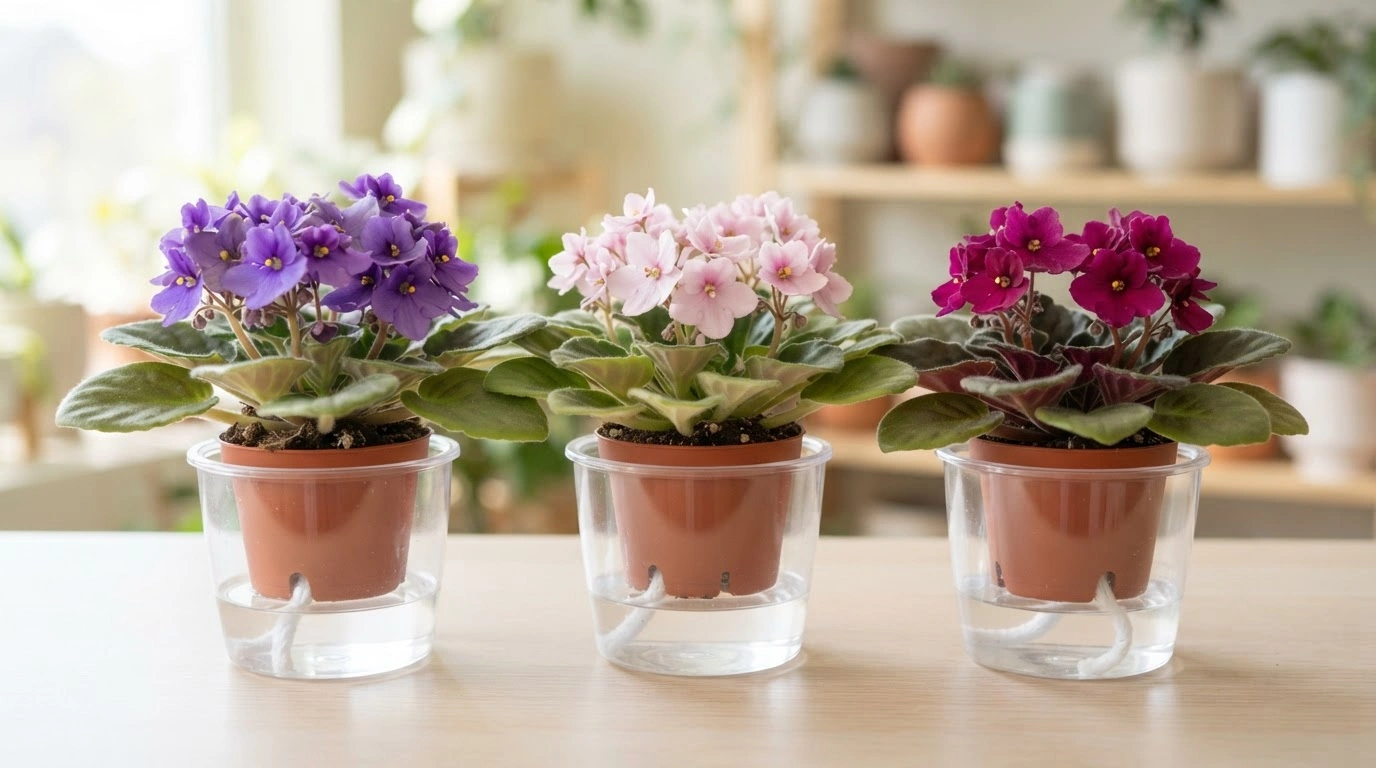
Wick watering is also considered the best watering technique and is great for managing one or two plants. There are a few methods you can use, and the most common is self-watering. Here’s how to do it -
- Add a wick to the bottom of the pot.
- Ensure that the wick touches the substrate inside the pot.
- The wick runs from the bottom of the pot, out of the drainage hole, and down into a water reservoir below the pot.
- Also, make sure that the pot is not sitting directly in the water. Before setting up wick watering, water the substrate thoroughly.
- Once everything is set, add your wick.
Another popular watering method is mat watering. This method uses the same capillary action that lets water travel upward into the pot’s soil. However, the mat that waters the pot stays on a damp, absorbent mat.
Choosing the Right Soil and Pot
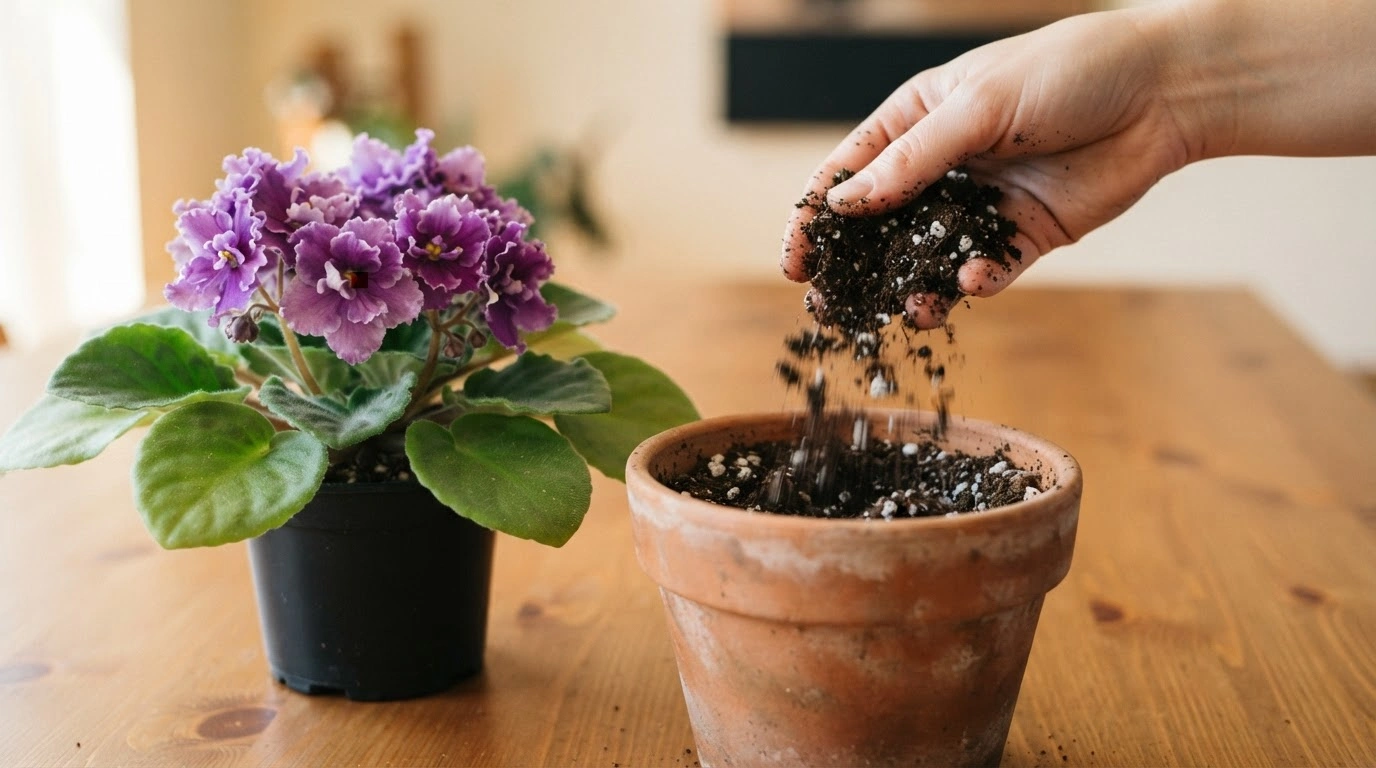
African violets require a light soil mix with good drainage. You can also mix equal parts of peat, perlite, and vermiculate. Some general potting mixes may need dolomite lime to achieve an overall pH between 6.0 and 7.0. You can also create a potting mix at home by sourcing items from the local garden stores.
Also, when potting, ensure you choose the container that is roughly 1/3rd the width of the plant’s leaf span. Some may find standard shallow pots work well, as they help keep water in contact with the roots. If you choose very deep pots, water can pool near the bottom of the plant.
How to Fertilize African Violets?
Fertilize African violets to prevent nutrient deficiency. Some symptoms of under-fertilization include -
- The leaves may look strong, but you may notice yellow patches along the edges.
- Some older leaves may begin to die back, while new leaves appear that seem small, dark, and gray-green, looking like a compact, flattened rosette.
- Leaves may look small, hard, and yellowish, especially at the center of the plant.
- Blooms may also be insufficient.
Here’s how to fertilize African violets so that it blooms to their fullest -
- Apply liquid fertilizer at half one quarter strength every time the plant is watered.
- Diluting the fertilizer makes sure that the delicate roots are not damaged.
- The mixture should be in equal parts, such as nitrogen (N), phosphorus (P), and potassium (K), as 20-20-20.
Tips to Encourage More Blooms
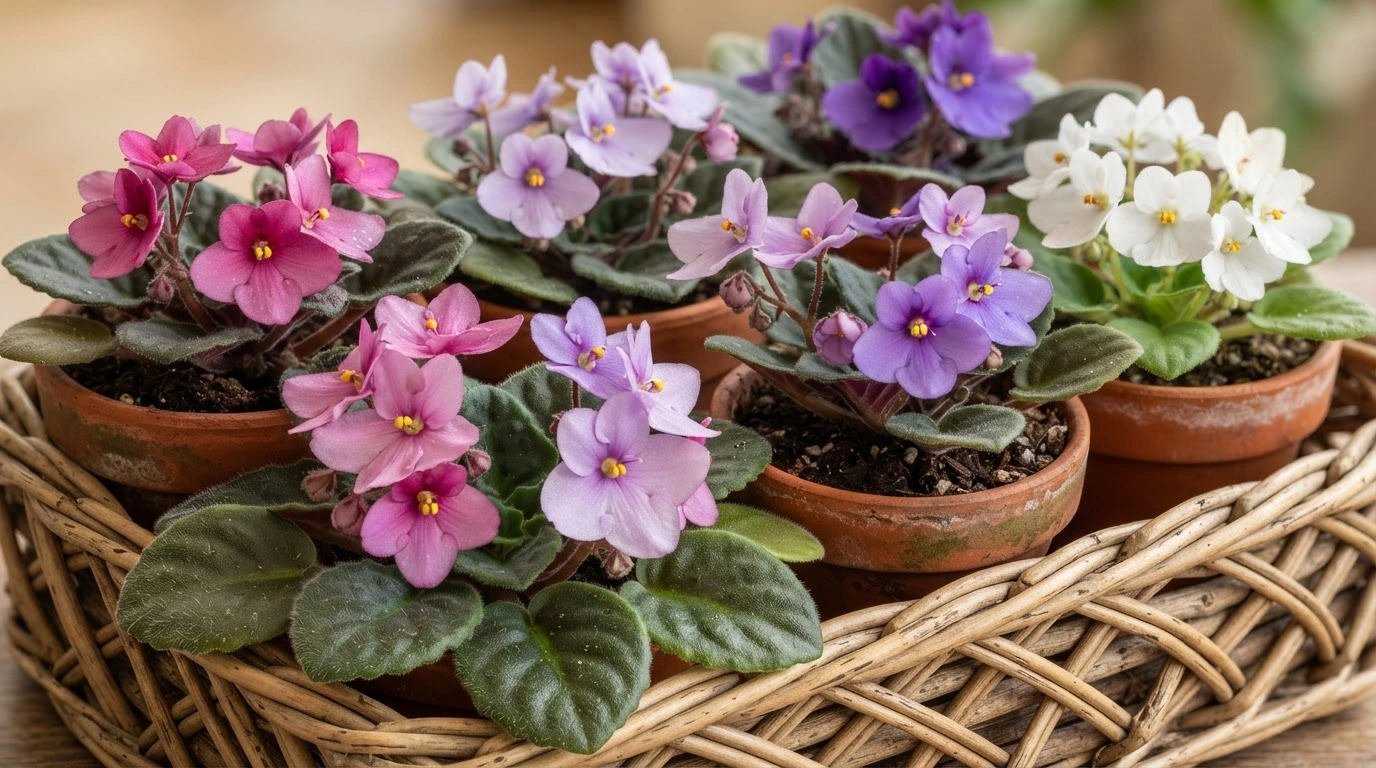
When you take good care of African Violets, they reward you with frequent and beautiful blooms. Follow these simple tips to encourage healthy growth and more blooms -
Keep the Plant in Proper Lighting
African violets thrive in bright but indirect light. So keep them near East or north-facing windows. Keeping them in direct sunlight can scorch the leaves and cause reduced blooming.
Ensure Feeding It Well
You can apply a diluted liquid houseplant feed every 3-4 weeks in Spring and Summer. Always make sure to follow the instructions on the pack.
Deadhead the Plant
Deadheading means removing fading flowers regularly. This helps keep the plant looking at its best throughout its growing phase. This also encourages the plants to produce more flowers.
Maintain the Ideal Temperature
It is best to keep the plant in a space with 65-80 degrees Fahrenheit. Ensure you keep them away from cold glass and avoid temperature fluctuations.
Common African Violet Problems and Solutions
Though African violets are easy to care for, there are certain problems that African violets might be prone to, such as -
Pale Leaves
Pale leaves are a common sign that indicates the plant is receiving too much light. So, move the plant away from the window where it receives indirect light.
Brown Leaves
Brown leaves are a common problem in African violets and indicates lack of water. Start watering them well, but ensure not to water too often, as it can cause the plant to become leggy.
Leaf Spots
This usually happens when the leaves are wet. If you are not using a self-watering pot, ensure not to make the leaves wet when you water them. It also indicates that the plant is getting too much water. So, make the adjustments accordingly and look out for spots before it spreads.
Pests
Mealy bugs, aphids, and spider mites are common pests that attack African violets. If you see insects, white cottony secretions, and stunted growth, understand there are pest infestations.
Diseases
African violets are also prone to diseases, such as powdery mildew and root rot. These diseases are mostly due to overwatering; hence, it is advised to cut back on watering. Also, consider removing dead or diseased leaves immediately.
Lack of Flowers
Lack of flowers usually means that the plant is not receiving ample light, food, or water. Adjust these factors one at a time to find out what’s causing the issue. Move the plant where it receives proper light, but ensure it is not placed in direct sunlight. Also, adjust the watering and nutrients schedule so that the African violets bloom beautifully.
How to Repot an African Violet?
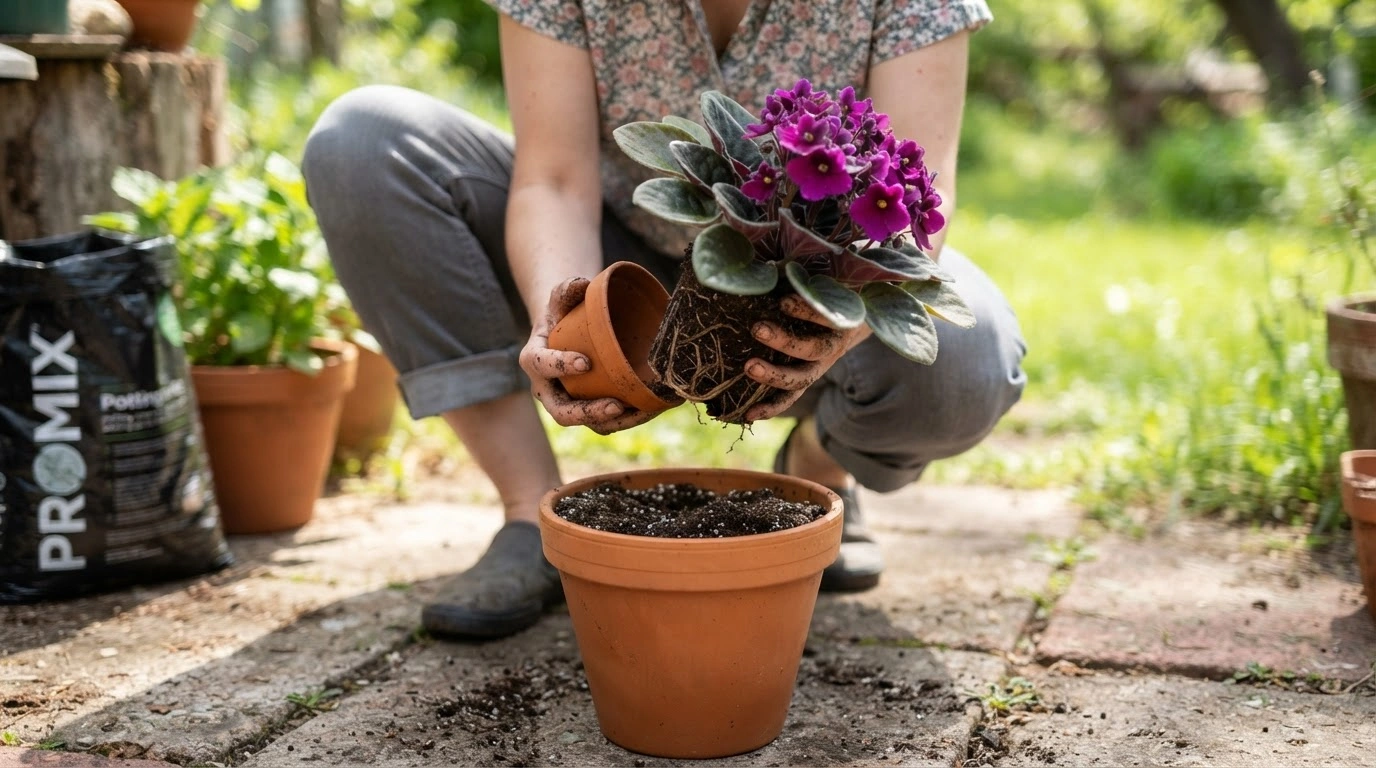
African violets must be repotted after they are bought from a nursery, as the general pots are not durable and cannot be used for longer. Also, it is advised to repot them once a year so that African violets receive airy soil.
It blooms well when rootbound, but when it becomes too rootbound, which means the roots start to grow out of the drainage hole, move it to a new planter.
Here’s how to repot African violets -
- Select a pot with 4 to 5 inches in diameter (self-watering or a ceramic pot with a drainage hole is preferred).
- Fill the container about 1/3 full with good-quality potting mix.
- Place the African violet into the soil, ensuring the lowest ring of leaves is flush with the pot’s rim.
- If needed, top up with more soil to fill the gaps around the roots.
How to Propagate African Violets?
African violets can be propagated from leaf cuttings or offsets. Here’s how to propagate African violets -
- Cut a leaf about 2-3 inches from the base of the plant.
- Dip the cut end in rooting hormone, then plant it in the potting mix.
- Water the cutting well after planting.
In addition to this method, you can also cut new shoots from the mother plant and pot them separately. Removing these offsets also encourages mother plants to produce more flowers.
Essential Care Tips for Long-Lasting African Violets
To keep the African violet in good condition for longer, follow these instructions -
- The plant should be placed in a room where it receives a good amount of sunlight.
- Make sure it is not under scorching heat.
- Keep the temperature between 65- 80 degrees F and protect it from cold and heat.
- Rotate the African violet by 90 degrees every week to encourage even growth.
- When watering, ensure that the leaves are not wet. Also, do not water when the soil is already drenched.
- Use only room temperature water, as cold water can shock the plant's growth.
- When potting, do not use heavy potting mix. Instead, use a light, porous potting mix that contains a high ratio of perlite.
- Remove faded and spent flowers to encourage more blooms.
Conclusion
African violets are beautiful houseplants. Though they are low maintenance, these plants need certain care and must meet basic needs. Provide bright, indirect light, in addition to watering only when the soil feels dry. Look out for signs of disease, pests, and damage, and take necessary precautions as and when needed.


